Villasimius and the south-east coast.
Porto Giunco, Simius, Punta Molentis and its 2026 entry rules, Cala Pira and the long sands of Costa Rei, with the Capo Carbonara marine protected area, the bus from Cagliari and where to stay.
Cagliari’s beach coast, an hour from the city.
Villasimius sits at Sardinia’s south-eastern corner, around the headland of Capo Carbonara. According to the marine park’s own website, it’s about 50 km by road from Cagliari, just under an hour by car or a little longer by bus, along a coast road with wide sea views.
The beaches are the reason to come. Porto Giunco and Simius are long, sandy and close to town. Punta Molentis is a small, fragile bay with strict 2026 limits. North of the cape, the panoramic provincial road runs on to Cala Pira, in the municipality of Castiadas, and to Costa Rei, a resort area of Muravera with around 10 km of sand.
Much of the sea here belongs to the Capo Carbonara marine protected area, which the municipality of Villasimius runs. That shapes what you can do on the water, from boat speeds to where you can swim.
Five beaches from Villasimius to Costa Rei
Descriptions come from SardegnaTurismo and the municipality’s parking company. Rules can change at short notice, so check before you go.
| Beach | What it’s like | Getting there | 2026 notes |
|---|---|---|---|
| Porto Giunco | Long, soft sand with pink tints from granite, a shallow sandy seabed, and the Notteri lagoon behind. | From the large car park, a path through a eucalyptus wood. A few minutes’ drive from the centre. | Paid parking. Booking a parking space was optional; the beach itself was free |
| Simius | About a kilometre of fine white sand, the closest big beach to town. | Easy from the town centre. | No entry booking |
| Punta Molentis | A curved, sheltered bay of white sand and shallow water on a small headland. | About 13 minutes’ drive from Villasimius on the road to Costa Rei. | Capped entry and a €10 ticket until 31 October 2026. No online booking |
| Cala Pira | A bay of pinkish sand and shallow water below a watchtower, framed by granite and old junipers. | Along the SP18 towards Costa Rei. Turn at about km 11 onto a dirt track. | Small car park. No entry booking |
| Costa Rei | Around 10 km of fine sand sloping gently into the sea, with hotels and restaurants. | Continue along the coast road north-east, or take the ARST bus from Cagliari. | No entry booking |
The sand dunes are off limits on all these beaches. Don’t take sand, shells or stones, and check the regional fire-risk bulletin before parking in wooded areas on hot, windy days.
How to approach each beach
The beaches near town are easy. The ones further out need a car or careful bus planning.
Porto Giunco — the long one with the lagoon
SardegnaTurismo calls Porto Giunco the “pearl” of the south-east. It’s a long strip of soft, pale sand on a narrow tongue of land between the sea and the Stagno di Notteri, a lagoon where flamingos and other migratory birds gather. The seabed is shallow and sandy, which suits families, and the bay is sheltered by headlands. A 17th-century Spanish watchtower stands on the headland to the south-west, and there’s a walk up to it.
Beach clubs rent umbrellas and sunbeds, and kiosks stay open into the evening in summer.
Simius — the town beach
SardegnaTurismo describes Simius as a “city” beach: about a kilometre of fine white sand that continues the coastline east of Porto Giunco, with the Porto Luna headland at its northern end. It’s the big beach closest to central Villasimius, which makes it handy for a short swim or an evening walk.
Cala Pira — a sheltered bay beyond the cape
Halfway between Capo Carbonara and Costa Rei, in the municipality of Castiadas, Cala Pira sits below a promontory with a tower of the same name. SardegnaTurismo describes shallow water that’s safe for children to play in, sand mixed with tiny fragments of coral, dunes and centuries-old junipers. There’s a small car park, a campsite and somewhere to eat, and the beach is accessible to disabled visitors.
Costa Rei — ten kilometres of sand
Costa Rei is a resort area of Muravera. SardegnaTurismo describes around 10 km of fine white sand, shallow water that shades from emerald to deep blue, and a wide range of hotels and restaurants. Smaller beaches nearby include Cala Sinzias, set between two headlands with a pine wood behind it, and the San Pietro, Monte Turno, Sant’Elmo and Santa Giusta stretches.
Inland, the mountains of the Sette Fratelli park make a cooler change from the beach. The former penal colony at Castiadas, built in 1877, is now a cultural centre and museum.
Punta Molentis: what changed in 2026
After a large fire in July 2025 and winter storm damage, Villasimius tightened access. A first ordinance on 5 June 2026 was replaced about a week later with slightly looser rules, valid until 31 October 2026. Here’s how the replacement rules worked, as reported by the municipality’s portal and the regional press.
Entry is capped and can’t be booked
The municipality’s PASS portal says Punta Molentis is the only beach in Villasimius with capped entry, and that access can’t be booked online. You go to the entrance and are let in while places remain.
Limits by land and by sea
Up to 190 people at a time arriving by land, and no more than 90 vehicles a day. Up to 100 people by sea, and only if they’re landed by operators authorised in the Capo Carbonara marine area.
A €10 ticket
The entry ticket was reported at €10 per person, however long you stay. Entry opened at 08:00. Reports disagree on the closing time, so check on the day.
Umbrellas and dunes
One umbrella per family or group was allowed, placed under the supervision of Villasimius Srl staff. Tents, gazebos and poles weren’t. Walking or sitting on the dunes was forbidden.
The rules were set for the 2026 season only. Before a 2027 trip, check the municipality of Villasimius and Villasimius Srl for the new ordinance.
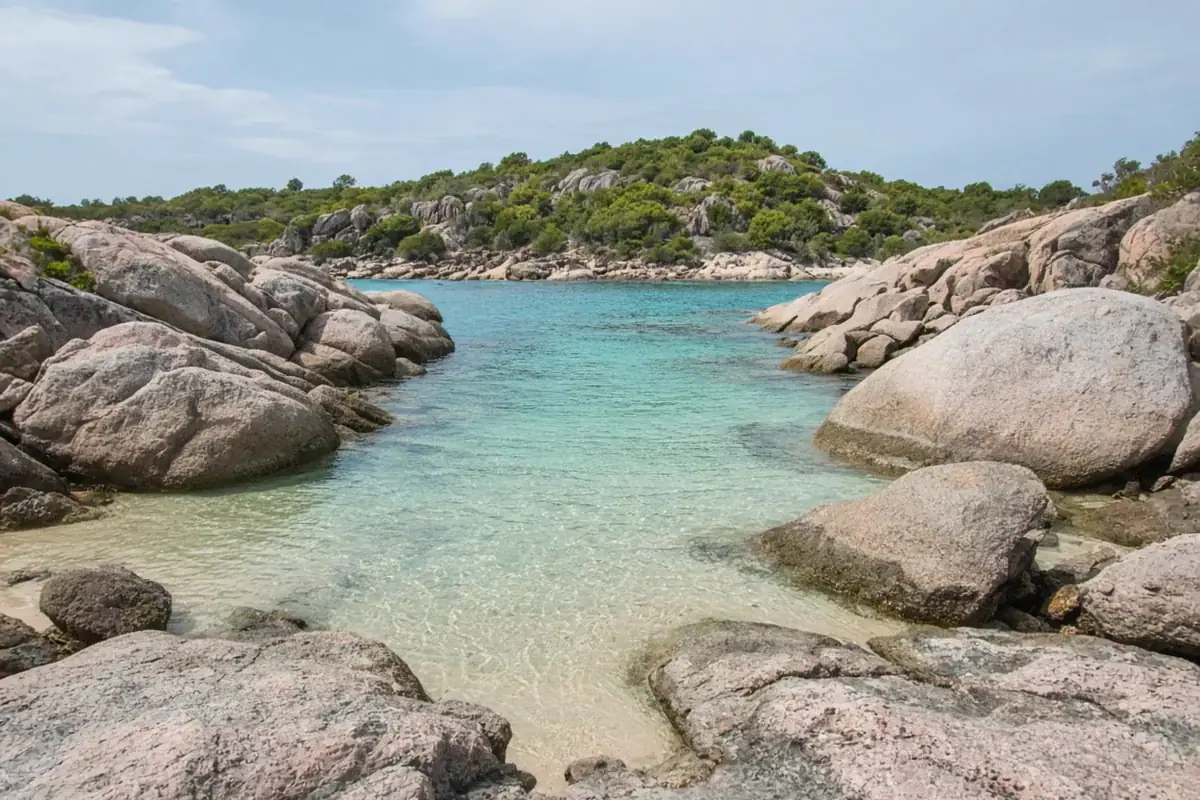
Two coasts, either side of the cape.
Capo Carbonara splits the area into a west-facing side and an east-facing side.
Porto Giunco, Simius and Punta Molentis are east of the cape, while Porto sa Ruxi, Campus and Campulongu are on the west side, towards Cagliari. When the wind picks up, one side may be more sheltered than the other, so it’s worth asking locally before you set off.
Capo Carbonara marine protected area
Italy’s environment ministry says the Capo Carbonara marine protected area was created in 1998 and covers about 14,360 hectares of sea along 34 km of coast. It’s managed by the municipality of Villasimius and includes the waters around Isola dei Cavoli, Serpentara and Punta Molentis.
The park is divided into four zones. In zone A, the fully protected area, swimming, fishing and unauthorised boats are banned. In zone B, swimming and snorkelling are allowed and boats are limited to 10 knots. Zone C also allows scuba diving with authorisation, and zone D allows boats up to 20 knots. Jet skis, water-skiing and spearfishing are banned everywhere in the park.
From Cagliari by car or bus
Timetables below are examples to show how the service works. They change by season, so check the current ARST timetable before travelling. Our Cagliari to Villasimius by bus guide has both directions, the beach stops and the last bus back.
ARST bus line 101
Line 101 runs from Cagliari’s ARST bus station through Quartu and along the coast to Villasimius. Some runs continue to Cala Sinzias, Costa Rei, Castiadas and Muravera. In late October 2026, the 08:15 from Cagliari reached Villasimius (Via Roma) at 09:42.
- Allow about 1 hour 25 minutes from Cagliari to Villasimius
- Not every run goes on to Costa Rei
- Some runs operate on working days only
Summer and winter timetables
The marine park’s website publishes a summer pattern, from mid-June to mid-September, with eight departures a day from Cagliari between 08:15 and 21:00, and fewer departures in winter.
- Check the ARST timetable for your exact date
- Late returns from Villasimius were listed in summer
- Fares and ticket options are on the ARST website
By car
Around 50 km from Cagliari, just under an hour, according to the marine park. A car makes it much easier to reach Punta Molentis, Cala Pira and Costa Rei, and to switch beaches when the wind changes.
- Budget for paid beach parking in season
- Arrive early for Punta Molentis, which has a daily vehicle cap
- Allow extra time on the scenic coast road in summer traffic
From the airport or port
Cagliari airport and port are the natural arrival points. From further away, the marine park suggests allowing 4–5 hours’ drive from Olbia, Porto Torres or Arbatax.
- See our Cagliari city guide for airport transport
- Ferry routes are in our ferries to Sardinia guide
- Car-free tips are in our Sardinia without a car guide
Four bases compared
Choose by how you’ll get to the beach each day.
Villasimius town
The widest choice of hotels, B&Bs and apartments, restaurants and shops, the ARST bus stops and the shortest trips to Simius and Porto Giunco. It’s the best base without a car.
Around Porto Giunco and Notteri
SardegnaTurismo notes hotels and residences around Porto Giunco. Staying here puts the beach and the lagoon within walking distance, and town is a short drive or bike ride away.
Costa Rei and Castiadas
Costa Rei has a long beach, hotels and restaurants, and campsites at Cala Sinzias and Cala Pira. It’s further from Cagliari and the bus is less frequent, but it suits a week of beach days.
Cagliari, with day trips
If you’d rather have a city base, Cagliari works for day trips by bus or car. You trade travel time for the city’s museums, restaurants and Poetto beach. See our Cagliari city guide and where to stay in Sardinia.
Frequently asked questions
Do I need to book Punta Molentis?
You couldn’t in 2026. The municipality’s portal says entry can’t be booked online: you go to the entrance and are let in while places remain. Under the 2026 rules, valid until 31 October 2026, up to 190 people at a time could arrive by land, with a cap of 90 vehicles a day, and the ticket was reported at €10 per person. Rules may change for 2027, so check before you go.
Can I get to Villasimius from Cagliari without a car?
Yes. ARST line 101 runs from Cagliari’s bus station to Villasimius in about 1 hour 25 minutes, and some runs continue to Costa Rei. Summer has more departures than winter, so check the timetable for your date.
Which beach is best for families?
Porto Giunco, Simius and Cala Pira all have shallow, sandy water, according to SardegnaTurismo, and Porto Giunco and Simius are close to town. Sea conditions change with the wind, so check the flags and lifeguard cover on the day.
Is Villasimius a protected area?
Much of its sea is. The Capo Carbonara marine protected area, created in 1998, covers about 14,360 hectares. Jet skis, water-skiing and spearfishing are banned, and some zones are closed to swimming and boats.
Is Costa Rei part of Villasimius?
No. Costa Rei is a resort area of Muravera, further north-east, and Cala Pira is in Castiadas. They’re on the same coast road, so many visitors combine them with Villasimius.
Pick your side of the cape.
Return to our Sardinia travel guide to pair Villasimius with Cagliari, the Costa Rei coast or the rest of the island.
Explore the Sardinia travel guide →