Puglia, the long way down the heel.
Whitewashed hill towns, trulli among the olive groves, Baroque Lecce and two seas meeting at the tip of the heel. Puglia has more coast than any other region on Italy’s mainland. Choose where to base yourself, how to get around and when to come, then slow down.
Plan your trip, step by step
Seventeen practical guides, checked against the 2026 timetables, town council notices and official sources.
Where to stay in Puglia
Bari, Polignano and Monopoli, the Itria Valley, Ostuni, Lecce, Otranto, Gallipoli and the Gargano compared.
Read the guide → 02 / GuideGetting around Puglia
Car hire and ZTLs, Trenitalia and Sud Est trains, airport links and summer beach buses, with or without a car.
Read the guide → 03 / GuideBest time to visit
Month by month, with sea temperatures, the beach season, festival dates and when things close.
Read the guide → 04 / GuideThe best beaches
Salento’s sandy bays, Polignano’s cove, Torre Guaceto and the Gargano, with 2026 access rules.
Read the guide → 05 / ItinerarySeven days in Puglia
Bari to Lecce via Polignano, the trulli and Ostuni, then the Salento coast, plus a car-free version.
Read the guide → 06 / Town guideAlberobello
The two trulli quarters, the Trullo Sovrano, parking, the train from Bari and nearby Itria Valley towns.
Read the guide → 07 / Town guidePolignano a Mare
Lama Monachile, the old town on the cliffs, boat trips, parking and the 30-minute train from Bari.
Read the guide → 08 / Town guideLecce
Baroque churches and the LeccEcclesiae ticket, the Roman amphitheatre, the ZTL and beaches nearby.
Read the guide →09 / Town guideOstuni
The white old town, the bus up from the station, the summer beach bus, the coast below and masseria stays.
Read the guide →10 / Town guideMonopoli
The old harbour and old town, the beaches south of town, the train and where to stay.
Read the guide →11 / Day tripBari to Matera day trip
FAL train or bus from Bari, what to see in the Sassi in a day and the last trip back.
Read the guide →12 / ComparisonPolignano or Monopoli?
Which coast town to stay in: evenings, beaches, rooms, prices and the train.
Read the guide →13 / City guideBari
The old town, San Nicola and the castle, street food, the airport train, the ZTL and where to stay.
Read the guide →14 / Area guideGargano peninsula
Vieste or Peschici as a base, sea-cave boat trips, the Baia delle Zagare pass and the Tremiti boats.
Read the guide →15 / Town guideGallipoli
The island old town and cathedral, Ionian beaches, trains from Lecce, the ZTL and where to stay.
Read the guide →16 / Town guideOtranto
The cathedral mosaic, the castle, sandy bays, the cave coast and the Grotta della Poesia.
Read the guide →17 / Area guideValle d’Itria
Locorotondo, Cisternino and Martina Franca beyond Alberobello, the opera festival and trains.
Read the guide →A coast of limestone, olive trees and two seas.
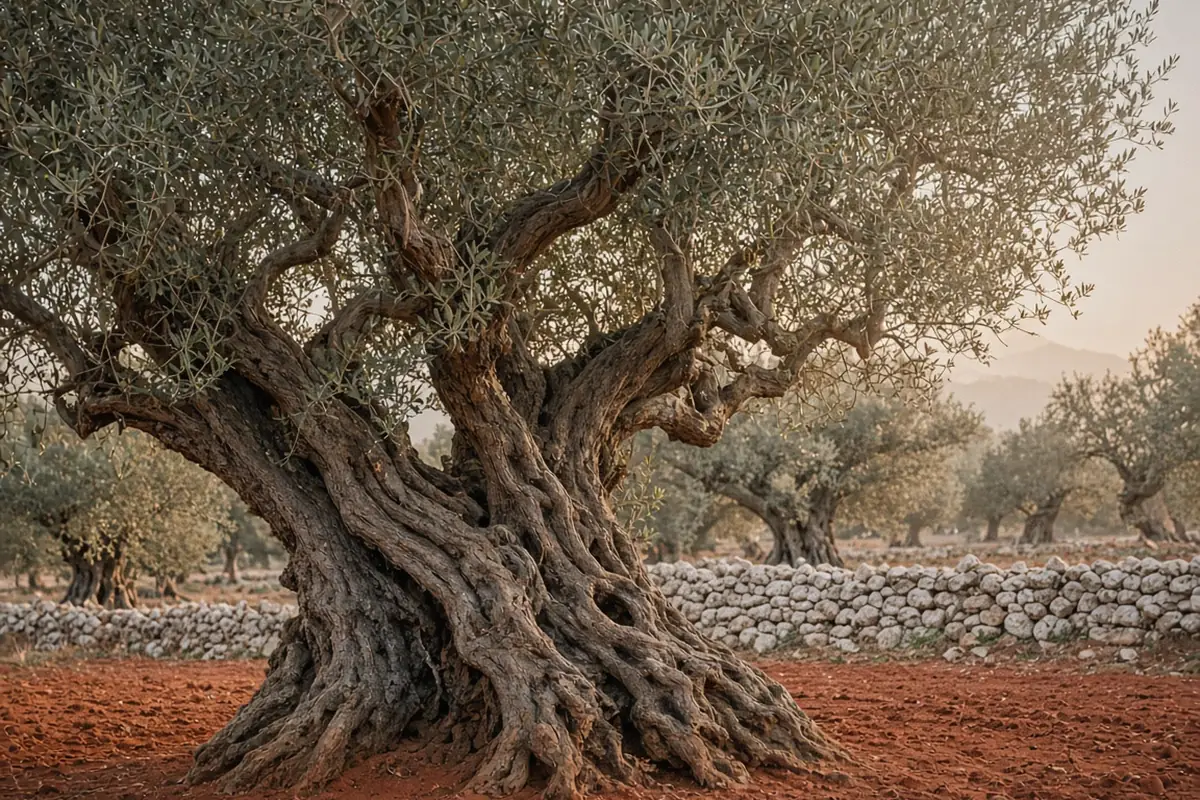
Puglia (Apulia in English) is the heel of Italy’s boot. Its coast runs for hundreds of kilometres, from the forested Gargano promontory in the north, past Bari and the cliff-top towns south of it, down to the Salento peninsula, where the Adriatic on the east side meets the Ionian Sea on the west.
Most of the region is flat or gently rolling, covered in olive groves, vineyards and dry-stone walls. Inland, between Bari and Brindisi, the Itria Valley is the land of the trulli, the round stone houses with conical roofs. The ones in Alberobello are a UNESCO World Heritage Site.
Most first-time visitors split a week between the area south of Bari (Polignano, Monopoli, the Itria Valley and Ostuni) and the Salento around Lecce. Fly into Bari and out of Brindisi, or the other way round, and you avoid backtracking.
Puglia in numbers and names
The basics you’ll want before booking flights and a car. Road distances are approximate and drive times assume no summer traffic.
| Topic | What to know |
|---|---|
| Airports | Bari (Karol Wojtyła) for the north and centre, Brindisi (Salento) for Lecce and the south. Foggia’s small airport has very few flights. |
| Bari airport to the city | Ferrotramviaria trains to Bari Centrale take about 20 minutes. The fare was €5.30 in 2026, and you can tap a contactless card at the gates. |
| Brindisi airport to Lecce | Direct buses take about 40 minutes and cost €6.50 (plus €1.50 if bought on board) in 2026. |
| Main railway | Trenitalia’s Adriatic line runs Bari, Polignano, Monopoli, Fasano, Ostuni, Brindisi and Lecce. The fastest trains take about 1 h 25 min from Bari to Lecce. |
| Local railway | Ferrovie del Sud Est (FSE) covers the Itria Valley and the Salento, including Alberobello, Martina Franca, Gallipoli and the line towards Otranto. Some sections run as replacement buses. |
| Distances | Bari to Polignano about 36 km, to Alberobello about 56 km, to Ostuni about 84 km, to Lecce about 150 km. Lecce to Otranto or Gallipoli about 40–50 km. |
| Beach season | The Region’s 2026 beach ordinance ran the official bathing season from 23 May to 13 September. Many beach clubs stay open into late September. |
| UNESCO sites | The Trulli of Alberobello (1996) and Castel del Monte (1996). Matera, a popular day trip from Bari, is just over the border in Basilicata. |
Towns and areas at a glance
Puglia is long and the distances add up. Think about transport, and whether you need a car, as well as the sights.
Bari
The regional capital, with the Basilica of San Nicola, the lanes of Bari Vecchia and a long seafront. It has the main airport and the best train links, so it works well for the first or last night.
Consider if: you arrive late or don’t want to drive.Polignano a Mare and Monopoli
Two seaside towns on the main railway. Polignano’s old town sits on cliffs above the Lama Monachile cove. Monopoli, a few minutes further on, has a working harbour and small rocky coves.
Consider if: you want the sea without a car.Read our Polignano a Mare guide →The Itria Valley
Alberobello’s trulli, the white circular old town of Locorotondo, Baroque Martina Franca and little Cisternino, all within about 20 minutes’ drive of each other. Many visitors stay in a restored trullo or a masseria (fortified farmhouse).
Consider if: you’ll drive and want countryside.Read our Alberobello guide →Ostuni
The “white city”, a whitewashed hill town looking over olive groves to the sea. The beaches and the Torre Guaceto reserve are a short drive away. The train station is outside town, about 15 minutes by bus.
Consider if: you want a hill town near the beach.Read our Ostuni guide →Lecce
A city of honey-coloured Baroque churches, built from soft local limestone, with a Roman amphitheatre in its main square. It’s the hub for Salento’s trains and summer beach buses.
Consider if: food, architecture and evenings out come first.Read our Lecce guide →Otranto
A walled town with a castle and a cathedral famous for its 12th-century mosaic floor. Rocky coast runs south from here, and the sandy bays of Torre dell’Orso lie to the north.
Consider if: you want clear water and a pretty base.Gallipoli and the Ionian coast
An old town on an island joined to the mainland by a bridge, near long sandy beaches and lively summer nightlife. The Ionian coast is where you’ll find sunsets over the sea.
Consider if: long sandy beaches are the priority.The Gargano
A wooded, mountainous promontory with white cliffs, sea caves and the beaches of Vieste and Peschici. It’s almost 190 km from Bari, so treat it as a separate trip.
Consider if: you have extra days and a car.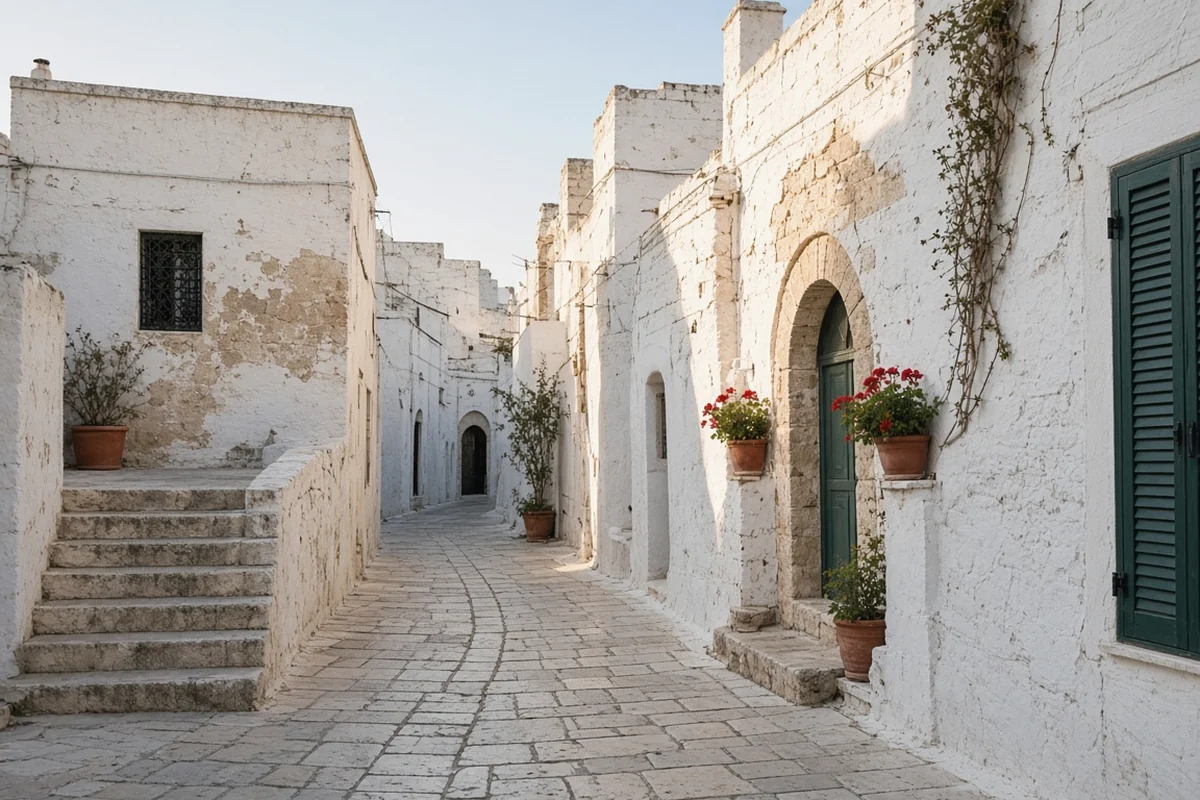
How to get to Puglia
By air to Bari
Bari’s airport has the most flights and a rail link to the city. From Bari Centrale, regional trains reach Polignano in about 30–40 minutes. For the Itria Valley, change to the Ferrovie del Sud Est line, or drive about an hour.
By air to Brindisi
Brindisi is the airport for Lecce and the Salento. Direct buses run to Lecce through the day, timed loosely around flights, and the drive is about 40 minutes.
By train
Frecciarossa and Intercity trains run down the Adriatic coast from northern Italy and Rome to Bari and Lecce. They’re useful if you’re combining Puglia with other regions.
By ferry
Bari and Brindisi have ferries across the Adriatic and Ionian seas to Greece, Albania, Montenegro and Croatia. Routes and operators change by season, so check the port’s current list.
Getting around Puglia
The coast towns are on the railway, but the countryside, the masserie and many beaches are much easier with a car.
Roads are good and mostly toll-free south of Bari, as the SS16 and SS379 dual carriageways do much of the work. Nearly every old town has a camera-controlled ZTL, so park outside and walk in.
Trenitalia covers the coast from Bari to Lecce. Ferrovie del Sud Est runs slower local lines inland and across the Salento. In autumn 2026, some weekday FSE sections ran as replacement buses.
From 13 June to 13 September 2026, the Province of Lecce’s SalentoinBus network linked Lecce with Otranto, Gallipoli, Leuca and other beaches. Read our getting-around guide.
When to go
June and September
The best balance. The sea is warm (around 22–25°C on average off Bari), the beach clubs are open, and prices and crowds are below their August peak.
July and August
Hot, busy and lively, with the Itria Valley opera festival in Martina Franca and the Notte della Taranta concert in Melpignano in late August. Book early, especially around 15 August.
May and October
Good for sightseeing, walking and food. The sea is cooler in May, while early October can still be warm. Some seaside hotels close from mid-October.
November to April
Quiet and cheaper, with olive harvest season in late autumn. Cities like Bari and Lecce stay lively, but many beach towns go to sleep.
A few things to check first
ZTLs everywhere
Lecce, Bari’s old town, Polignano, Alberobello and Ostuni all restrict traffic in their historic centres, with cameras at the gates. If your hotel is inside one, give it your number plate in advance. How the ZTLs work
No swimming at the Grotta della Poesia
The famous rock pool near Roca Vecchia is a ticketed archaeological site in summer (€5 in 2026), and swimming and diving are banned. Where to swim instead
Sud Est replacement buses
Check whether your Ferrovie del Sud Est journey is a train or a replacement bus, especially on weekdays. Bus stops are not always at the station. Trains and buses explained
Church dress codes
Lecce’s Baroque churches ask visitors to cover shoulders and knees and remove hats. The LeccEcclesiae ticket covers the cathedral, Santa Croce and three other sites. Plan Lecce
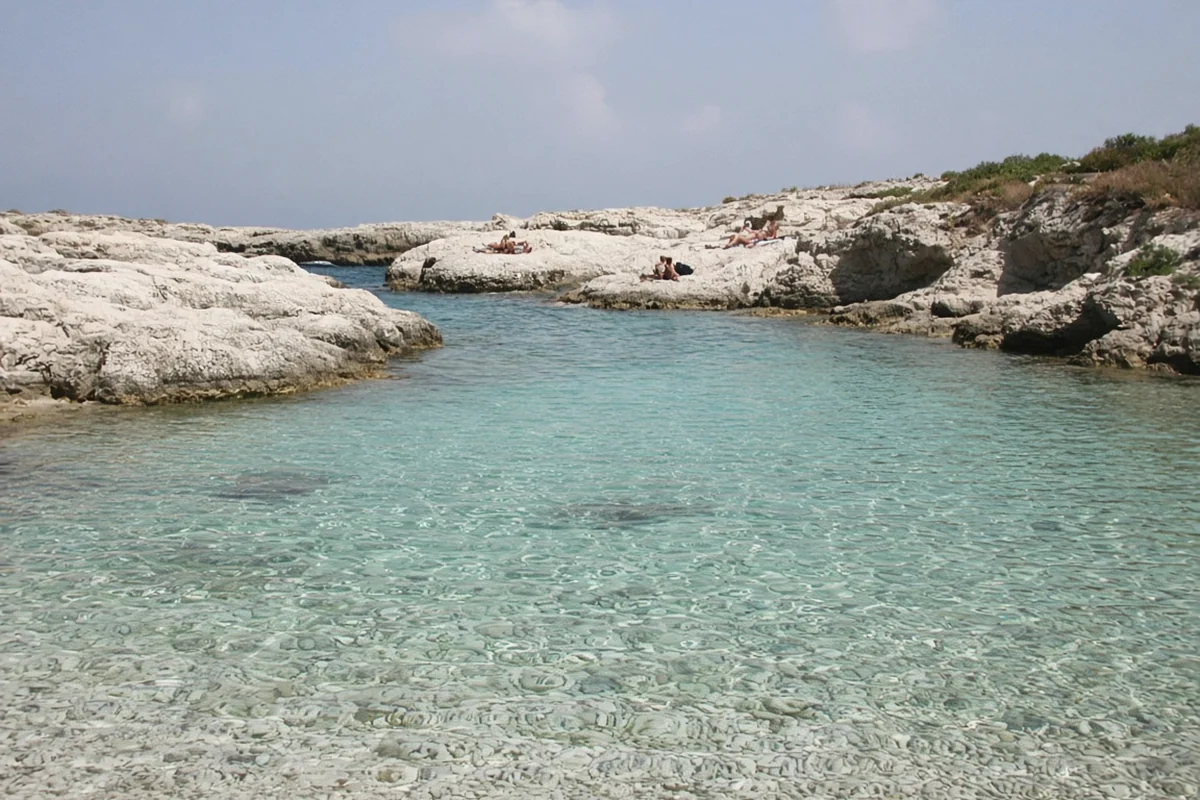
Planning for 2027? Timetables, fares, ticket prices and beach rules are set each year. The details on these pages are from 2026, so check the official websites before you book.
Puglia FAQs
How many days do you need in Puglia?
A week covers the coast and countryside between Bari and Ostuni plus Lecce and the Salento, using two bases. Add three or four days for the Gargano in the north. See our seven-day itinerary.
Do I need a car in Puglia?
Not for Bari, Polignano a Mare, Monopoli and Lecce, which are on the main railway. For the Itria Valley countryside, masserie and many beaches, a car makes life much easier. Our getting around guide compares the options.
Which airport should I fly into?
Bari has the most flights and is best for Polignano, Monopoli and the trulli. Brindisi is closer to Lecce and the Salento. Many visitors fly into one and out of the other.
When is the best time to visit Puglia?
June and September, for warm sea and fewer crowds than in July and August. May and October suit sightseeing more than swimming. See the best time to visit Puglia.
Where should I stay in Puglia?
For a first trip, split your stay between Monopoli, Polignano or a trullo in the Itria Valley, and Lecce. Our where to stay guide compares every area.